HubSpot consulting for B2B revenue teams.

HubSpot implementation, migrations, cleanup, pipelines, workflows, custom objects, Breeze and custom development, done hands-on by the founders. We are HubSpot developers.

  • The founders do the work
  • HubSpot developers
  • Scoped before work begins
  • No retainer, no lock-in
HubSpot · Deals · Board
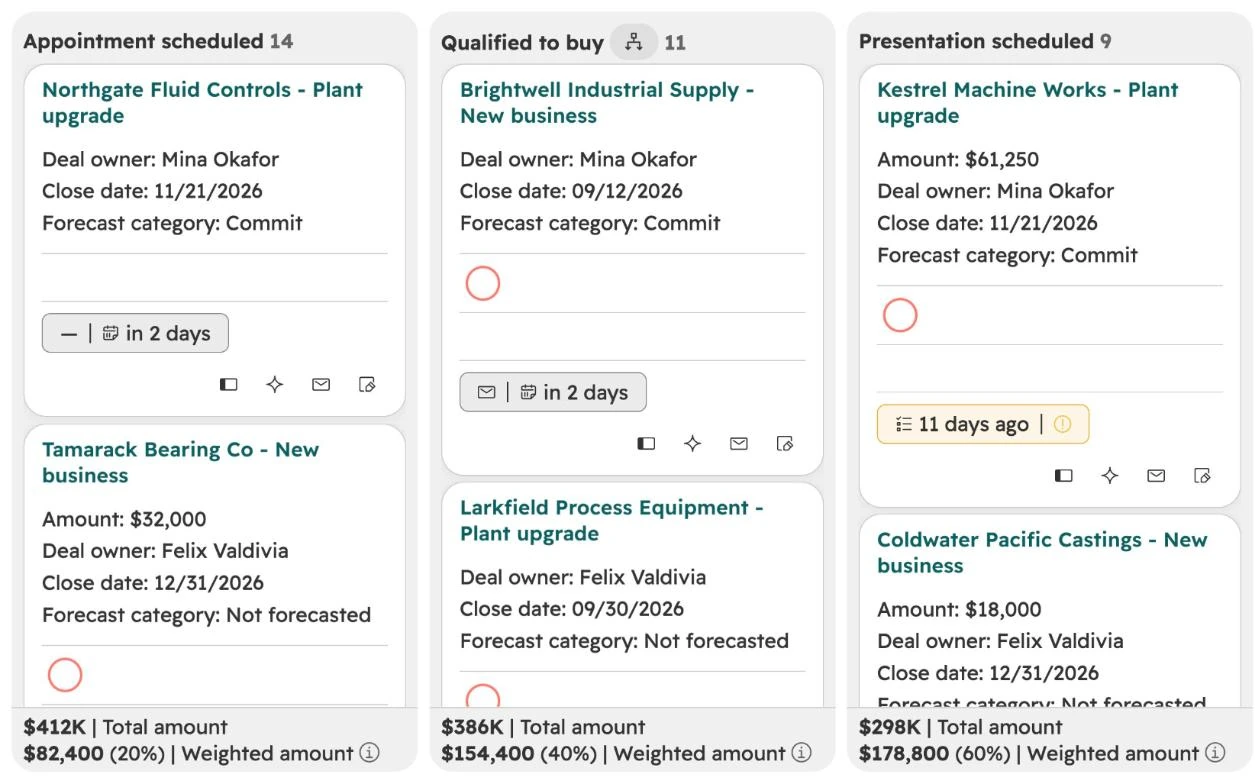
HubSpot's deal board, shown with sample data: open deals by stage, each card with its amount, deal owner, close date and forecast category, and the total and weighted amount under each stage.
Atlas · CRM Diagnostic
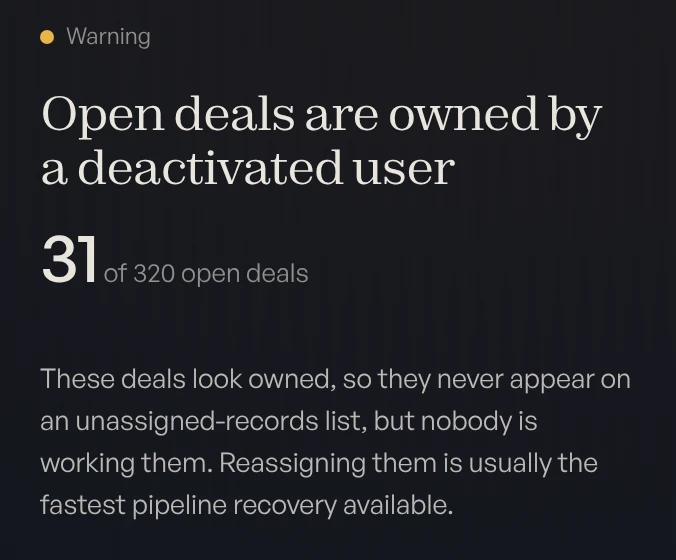
From the CRM Diagnostic on the same sample portal. Warning finding: 31 of 320 open deals are owned by a deactivated user.
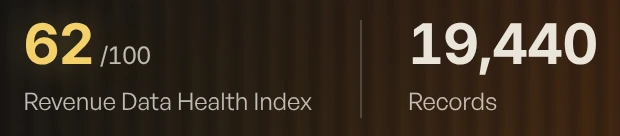
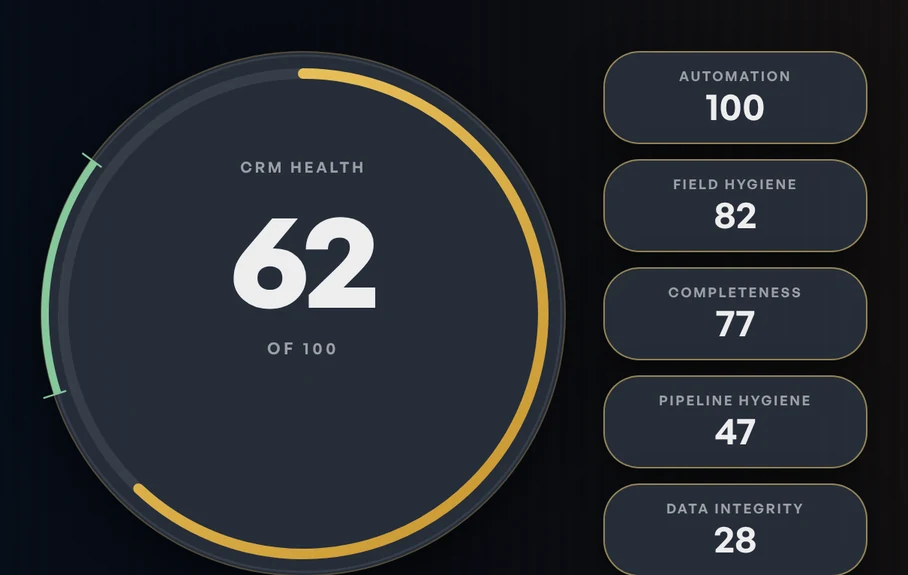
Atlas on the same sample portal: a Revenue Data Health Index of 62 out of 100 across 19,440 records.

HubSpot is where your team works. Atlas is the platform we built to sit on top of it, and it shows what HubSpot doesn’t: deals stranded with a departed owner, accounts nobody owns, one score for the whole portal. We do the consulting, and we bring the technology. See Atlas →

  • $155kannual subscription spend saved
  • 2.7×MQLs from the same campaigns, year over year
  • 21 → 88CRM Diagnostic score, in nine weeks

Arkestro’s Salesforce-to-HubSpot migration. “A pivotal strategic partner in our growth.” Stuart Gold, SVP Marketing. See the migration

We work in

HubSpot Salesforce Pipedrive
$85M
Client revenue created to date
150+
B2B companies served
1,000+
Sales reps, managers and VPs hired
35+
Clients acquired or exited

What if your HubSpot portal is too tangled to touch?

HubSpot cleanup maps the properties, workflows, lists and reports already in your portal, retires what nobody uses, and rebuilds a documented baseline your team can work in.

Book your free diagnostic
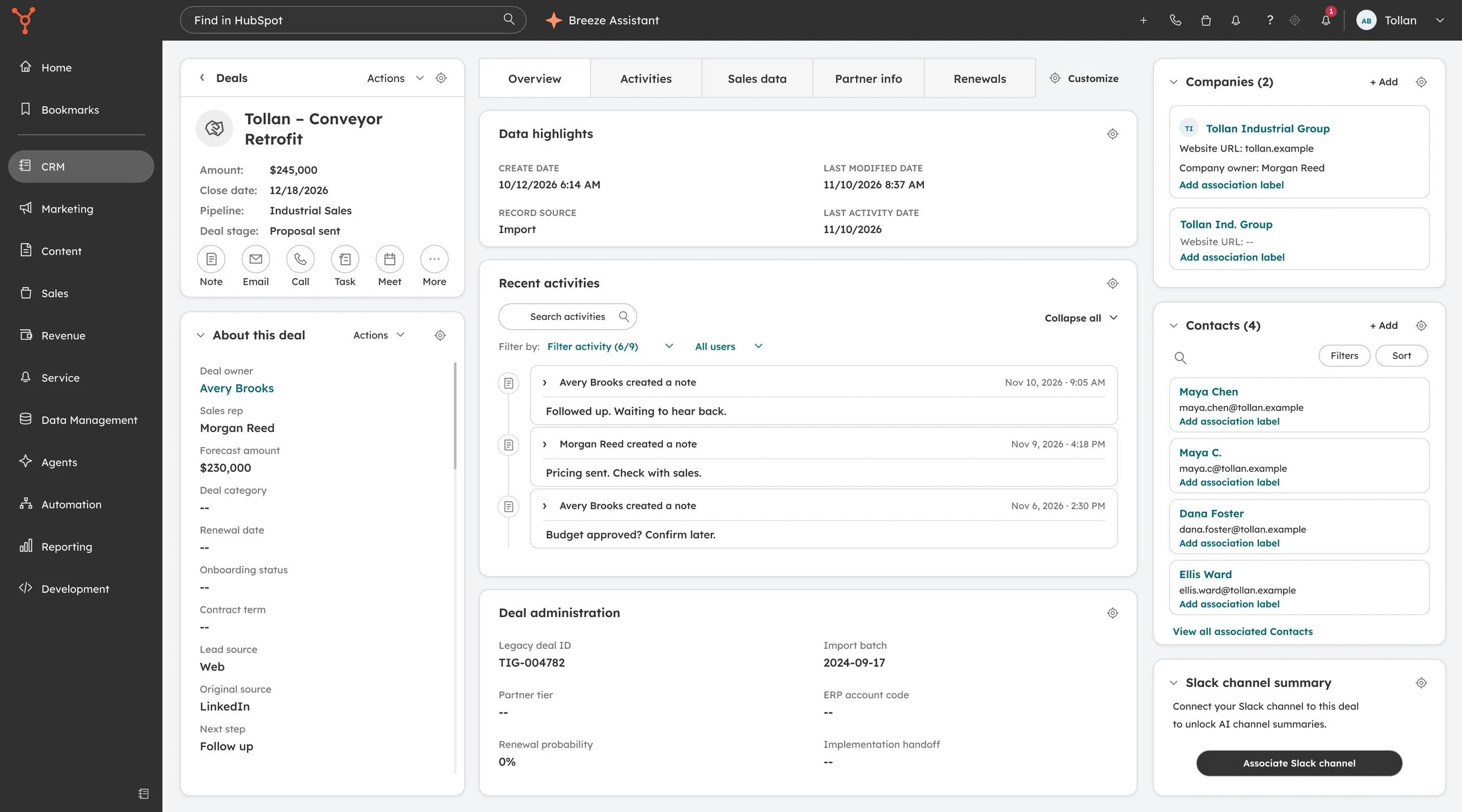
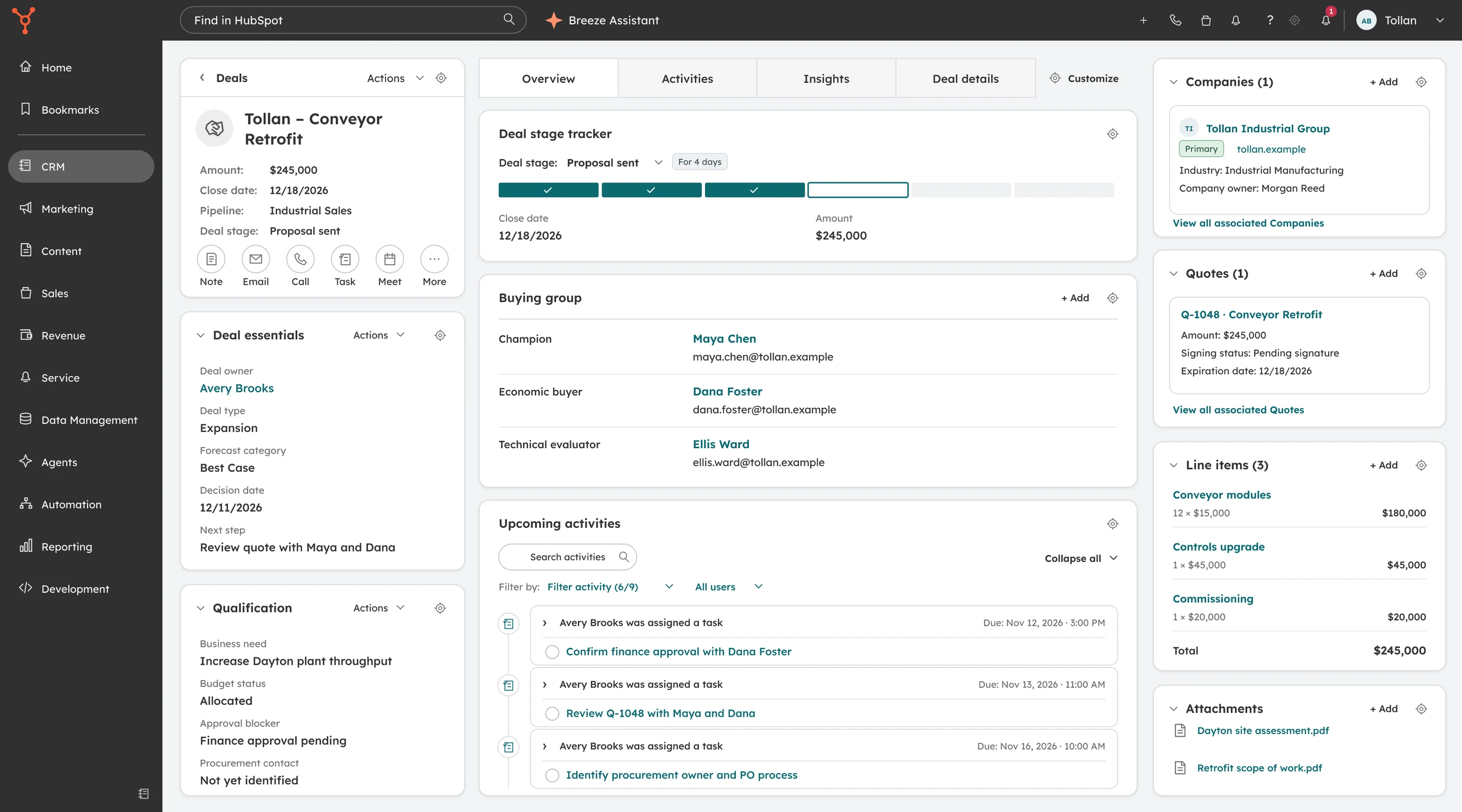
Before: a fictional $245,000 Tollan Industrial Group deal in HubSpot, with poorly prioritized properties, unlabeled buying contacts and vague next actions. After: the same fictional $245,000 Tollan Industrial Group deal in HubSpot, with focused deal properties, buying-group roles, visible stage progression and clear next actions.

After a few years, most are. Every leader and ops hire added properties, workflows and reports, and nobody removed the old ones. Now a small change breaks something three steps away, so nothing gets changed. HubSpot cleanup maps what exists, retires what nobody uses and rebuilds a baseline your team can work in.

  • Hundreds of properties, and nobody knows which ones matterThe same thing captured three ways, and lead sources spelled five.
  • Workflows nobody can explainStill enrolling records and sending emails, built by someone who has left.
  • Nobody dares delete anythingIt might feed a report, a list or an integration, and nothing says which.
  • Reps work around itThey keep their own spreadsheet, so the portal drifts further from the truth.
  • Leaders stop trusting the numbersEvery report needs a caveat before anyone will act on it.
  1. Map it

    Every property, workflow, list and report, with what uses it and when it last did anything.

  2. Retire it safely

    Switched off before it is deleted, in order, so nothing breaks unnoticed.

  3. Rebuild the baseline

    The fields, stages and automation you need now, documented, with a rule for what gets added next.

How to find the fields nobody uses →
  • 640 → 190properties
  • 140 → 45active workflows
  • 300 → 60reports and lists

An example cleanup, with made-up figures.

What HubSpot consulting work do we do?

As your HubSpot consultants, we handle everything in the portal your numbers depend on, from HubSpot implementation and onboarding to the data model and the forecast. Each piece is scoped before it starts and documented when it ends.

From Salesforce, Pipedrive or another CRM, into a data model with the custom objects your business needs. The data is measured and cleaned before it moves. How a migration runs
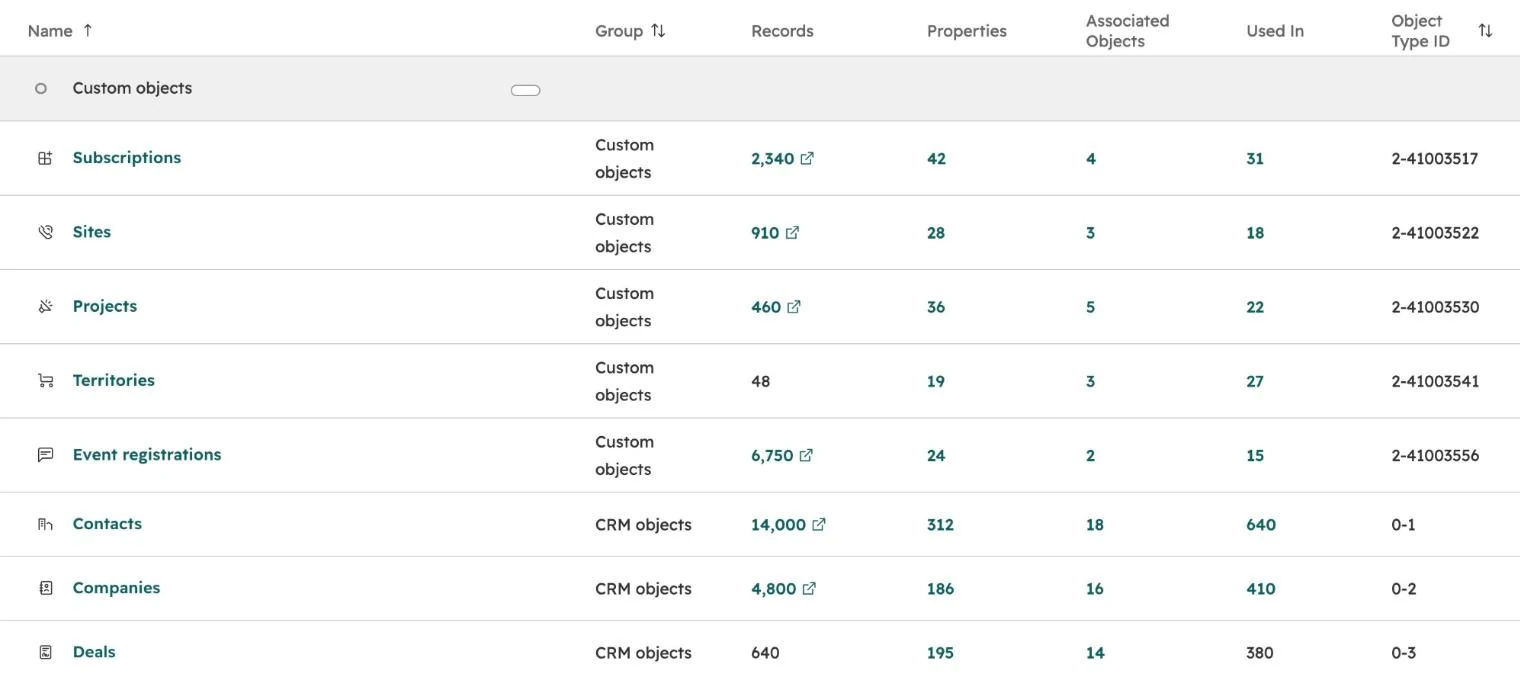
HubSpot · Data Management · Data model
HubSpot's data model, shown with sample data: custom objects and standard CRM objects with their record, property and association counts.

Duplicates, properties, ownership and field hygiene, rebuilt until your team trusts the numbers. Fill rates show which fields are doing any work.
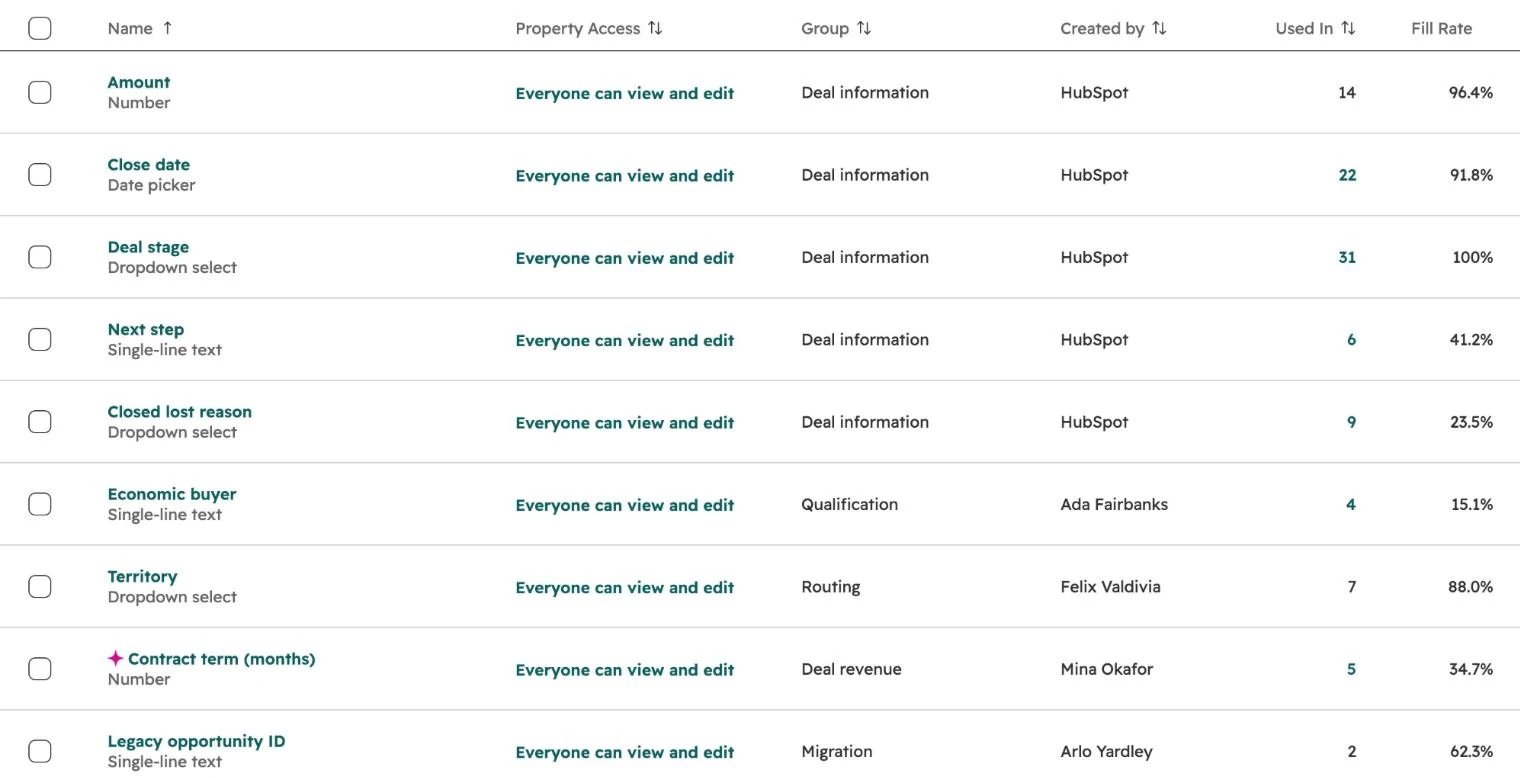
HubSpot · Settings · Properties · Deals
HubSpot's deal property settings, shown with sample data: each property with its group, who created it, where it is used and its fill rate.

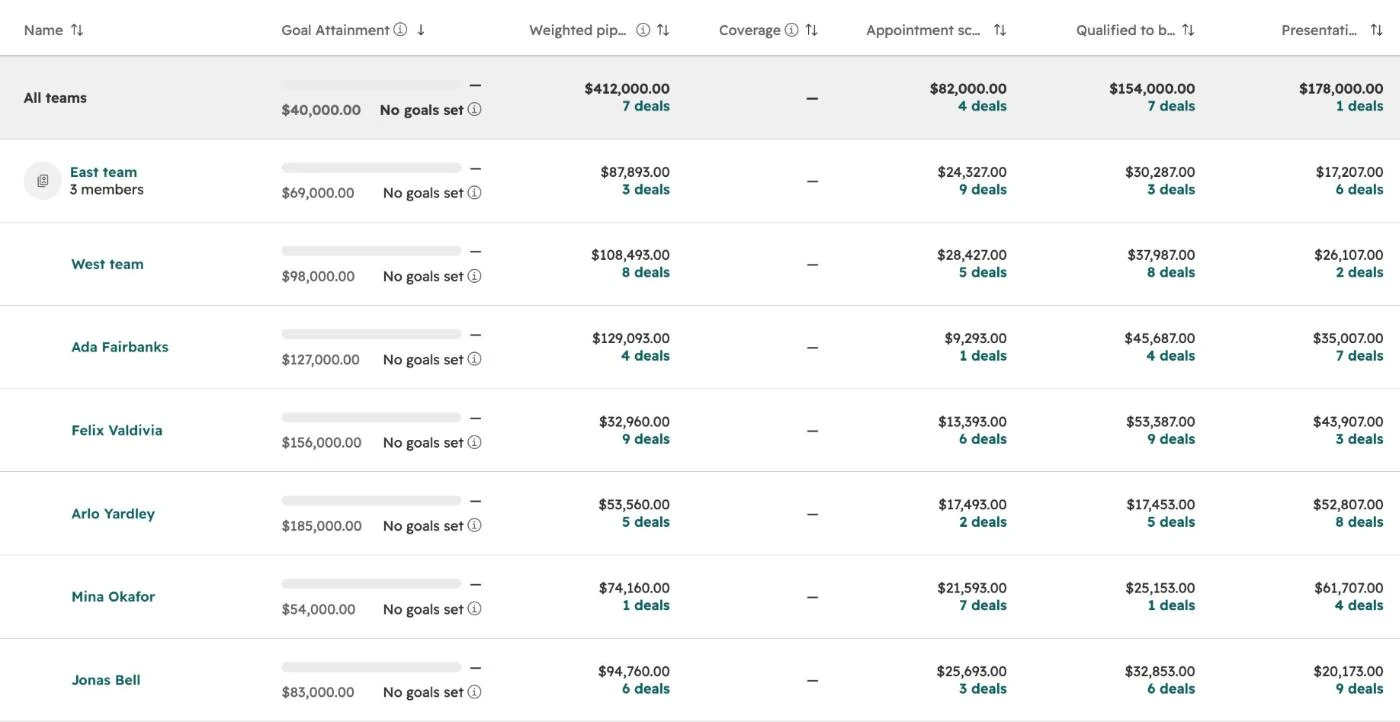
Stage design, stage odds set from your own win rates, goals, and a forecast your leaders can defend.
HubSpot · Forecast
HubSpot's forecast tool, shown with sample data: weighted pipeline and deals per stage for each team and rep, with no goals set.

Routing, handoffs and lifecycle automation that keep every record with an active owner.

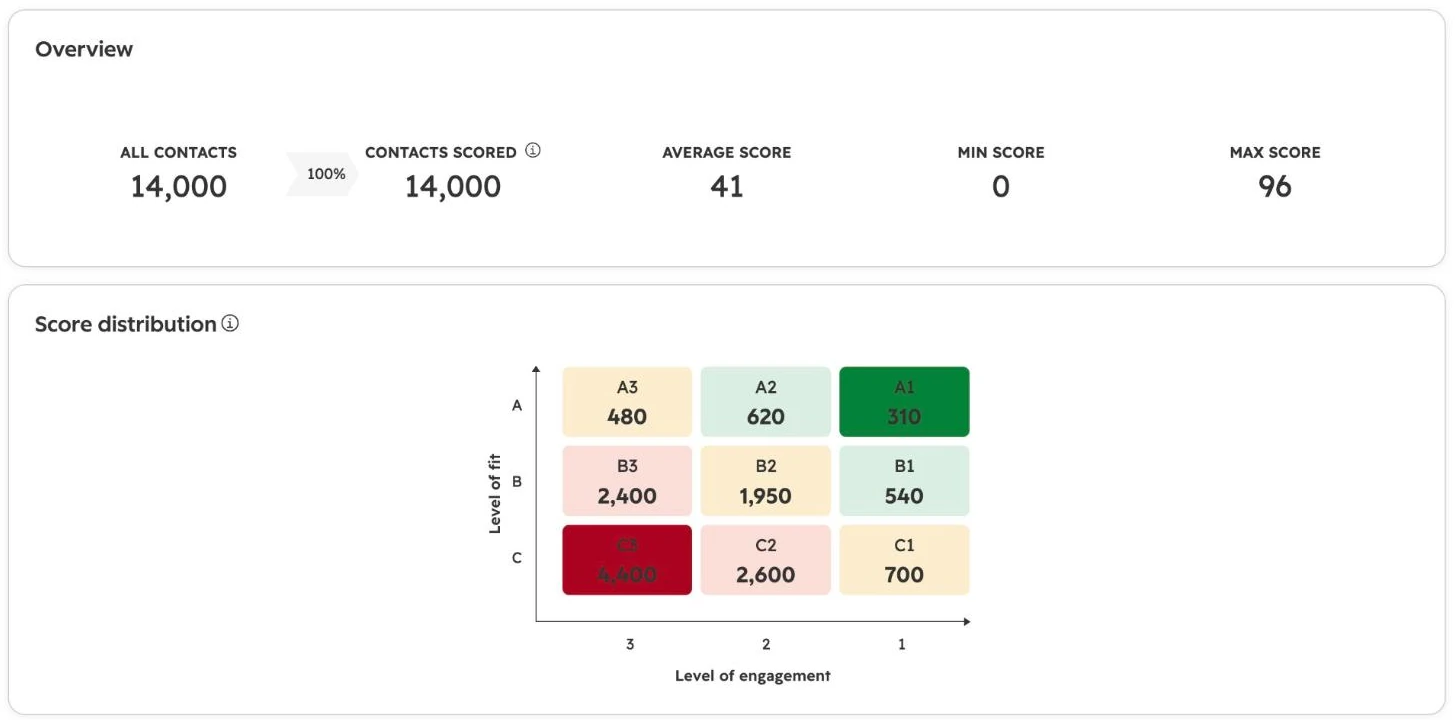
Dashboards your leaders use, and a lead score sales trusts, built on fit and engagement.
HubSpot · Marketing · Lead scoring
HubSpot's lead scoring overview, shown with sample data: 14,000 contacts scored, an average score of 41, and a grid of contacts by level of fit and level of engagement.

Custom apps, custom-code workflows and integrations, and data made ready before Breeze agents write to your CRM.

What changes inside your portal?

Three places HubSpot’s defaults and blind spots create numbers nobody trusts, and how we fix each.

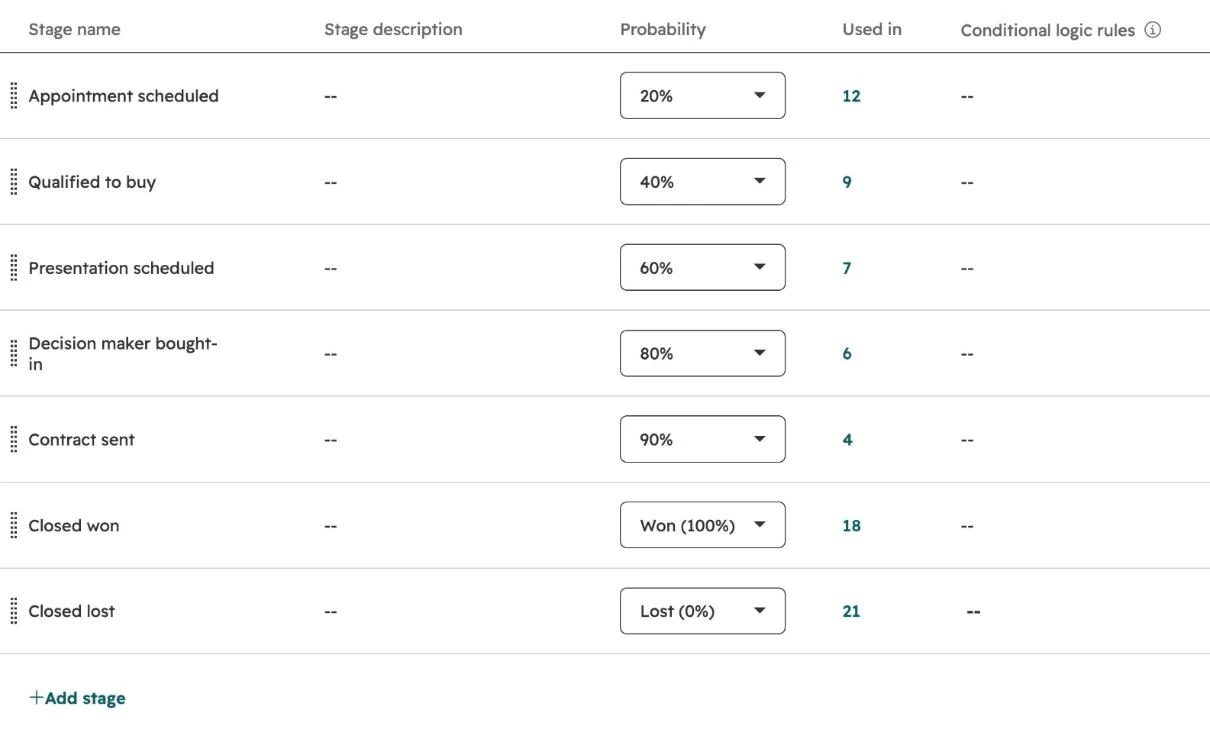
Stage odds come from your own win rates.

HubSpot’s default sales pipeline weights its open stages at 20, 40, 60, 80 and 90 percent. We replace them with stage-to-close rates from your own closed deals, so weighted pipeline stops being a guess. How to calibrate stage probabilities
HubSpot · Settings · Deals · Pipelines
HubSpot's deal pipeline settings, shown with sample data: the default sales pipeline stages, Appointment scheduled through Closed lost, with win probabilities of 20, 40, 60, 80 and 90 percent.

Duplicates stop coming back.

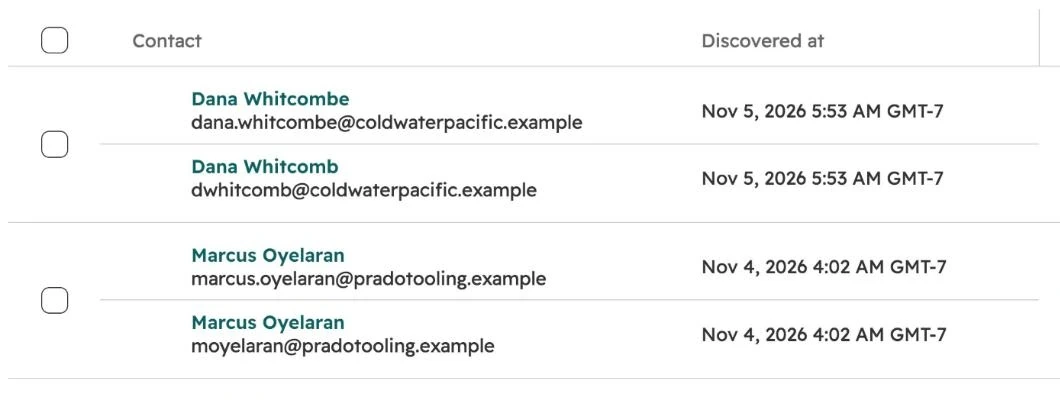
HubSpot’s Manage Duplicates tool shows the pairs. Merging them clears the count until integrations, forms and imports refill it, so we fix the inflow at its source. The Diagnostic adds what the tool can’t list, like records nobody owns. Why duplicates keep coming back
HubSpot · Data Quality · Manage Duplicates
A close-up of HubSpot's Manage Duplicates tool, shown with sample data: two pairs of contact records with matching names and email addresses, each with a similarity score.
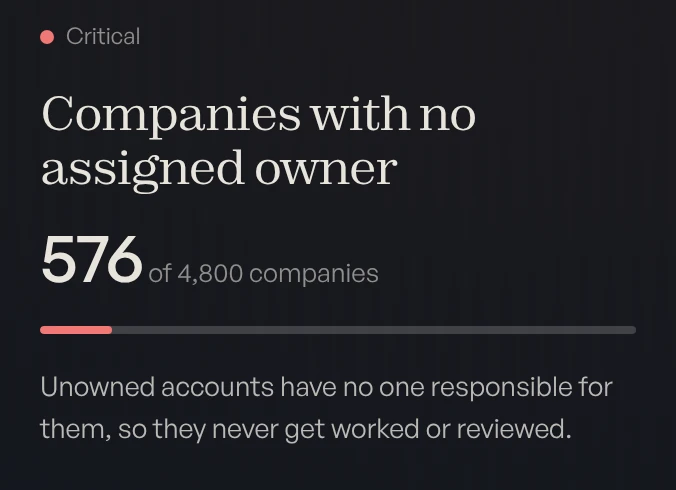
From the CRM Diagnostic on the same sample portal. Critical finding: 576 of 4,800 companies have no assigned owner.

Every open deal has an owner who still works here.

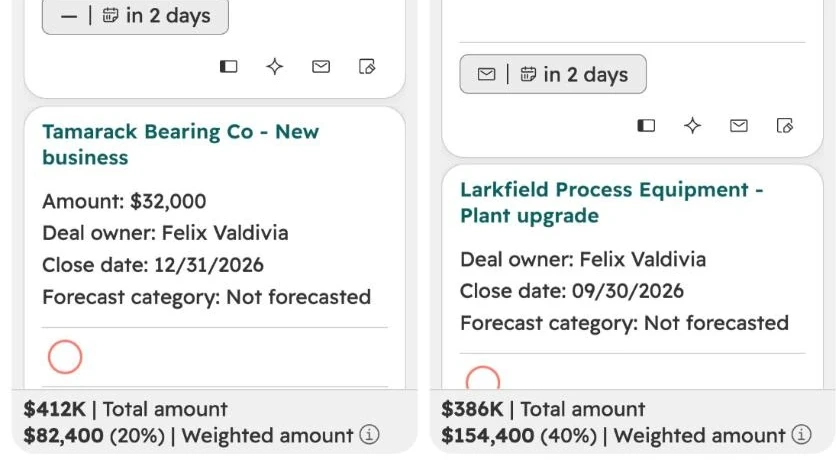
The deal board shows an owner on every card. It doesn’t show which owners have left, so their deals look covered and never reach an unassigned list. We rebuild routing and handoffs so ownership follows the person, and the Diagnostic finds the deals already stranded. Reassigning a departing rep’s records
HubSpot · Deals · Board
A close-up of HubSpot's deal board, shown with sample data: two open deals with their owner, close date and forecast category, above the total and weighted amount for each stage.
From the CRM Diagnostic on the same sample portal. Warning finding: 31 of 320 open deals are owned by a deactivated user.

What have we built in HubSpot?

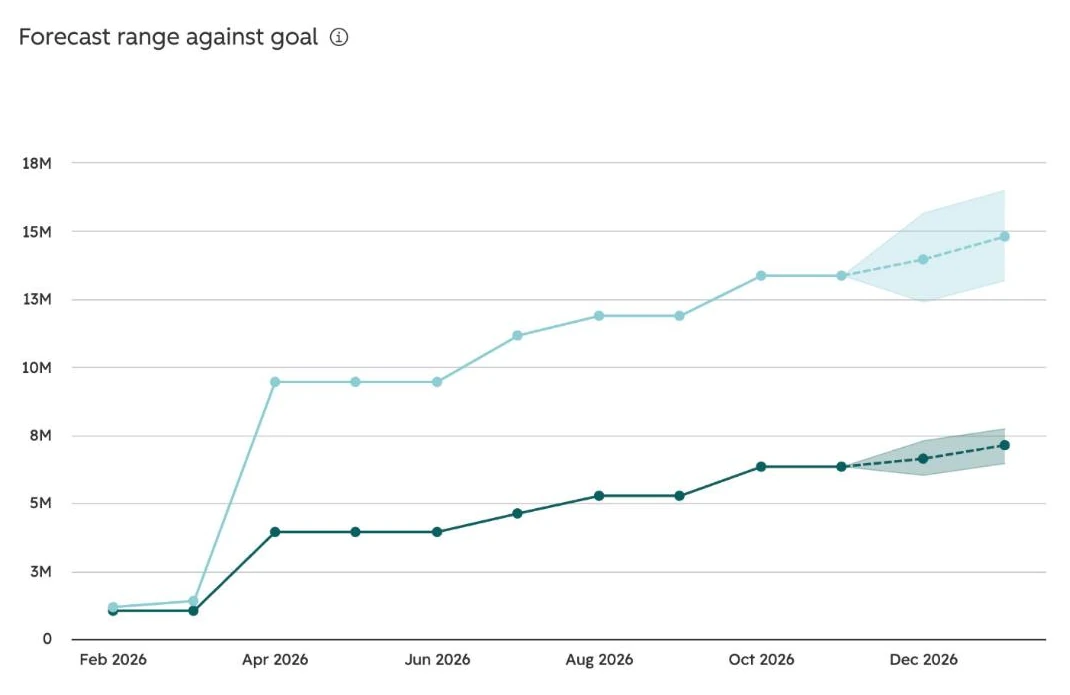
Reports, dashboards, forecasts and the pipelines under them, built in HubSpot. Shown here with sample data.
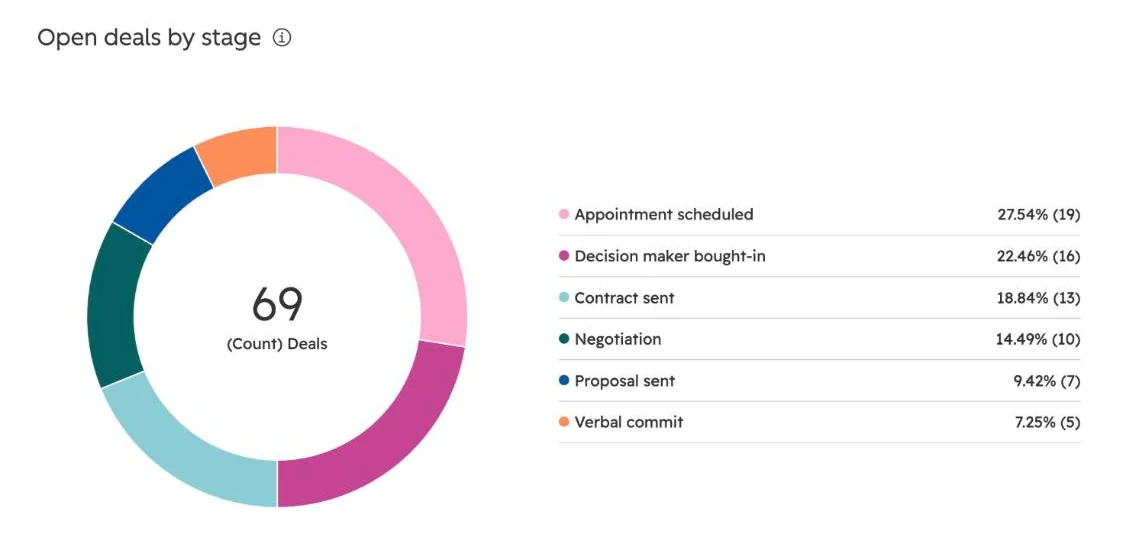
  • A HubSpot report, shown with sample data: a donut chart of 69 open deals by stage, with each stage's share listed beside it.
  • A HubSpot report, shown with sample data: forecast and best case by month, with a shaded projected range against goal.
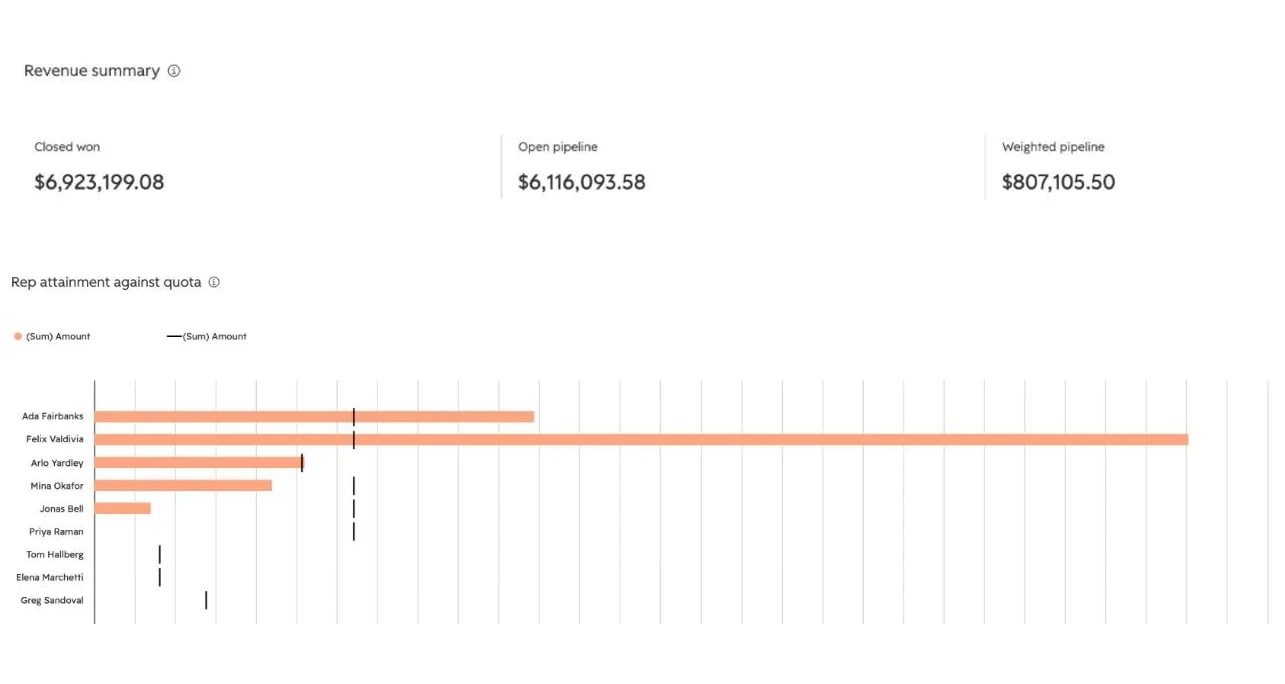
  • A HubSpot dashboard, shown with sample data: closed won, open pipeline and weighted pipeline totals above rep attainment against quota.
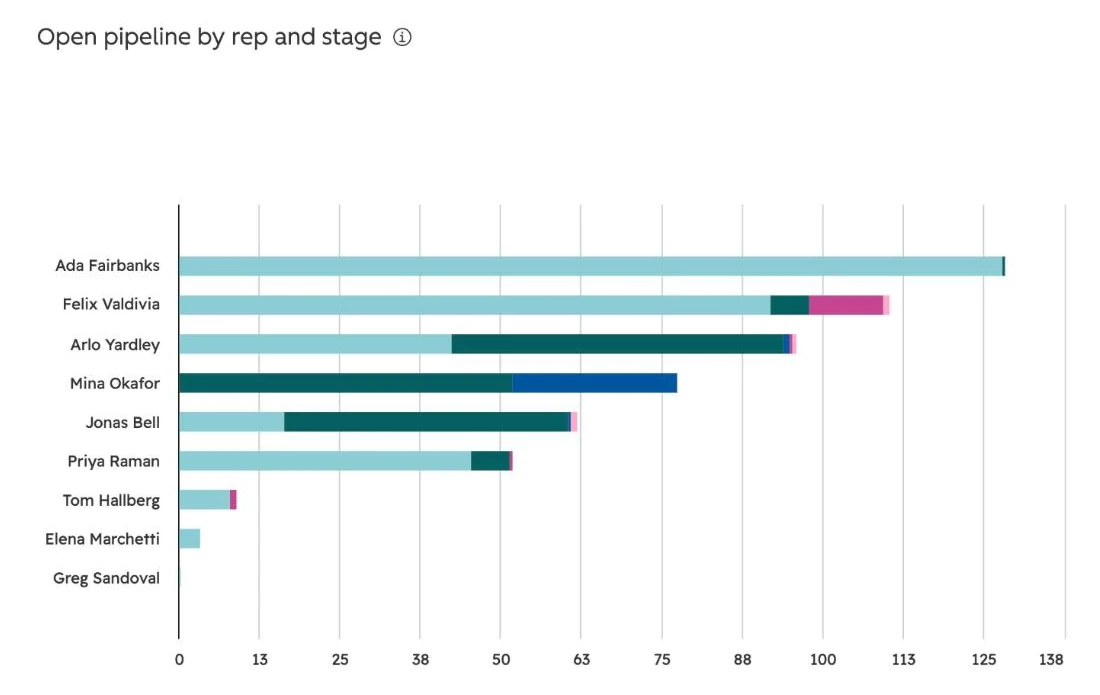
  • A HubSpot report, shown with sample data: a stacked bar chart of open pipeline by rep and stage.
  • HubSpot screen, shown with sample data.
  • HubSpot screen, shown with sample data.

Three builds that needed a developer.

Where to start.

With the free CRM Diagnostic. It runs 40+ automated checks across your contacts, companies and deals, read-only, and ranks what it finds. We scope the work from that report.

  • One unified scoreEvery fix lifts the health of your whole portal.
  • Beyond the surfaceFindings ranked by severity, with the records behind each.
  • Trends over timeRe-run after cleanup and watch the score move.
The Summary of a sample CRM Diagnostic report on a HubSpot portal: 812 contacts share an email with another record, 6% of all contacts, followed by a chart of the problems touching the most records.
The score of a sample report: CRM health 62 of 100, with a score for automation, field hygiene, completeness, pipeline hygiene and data integrity.
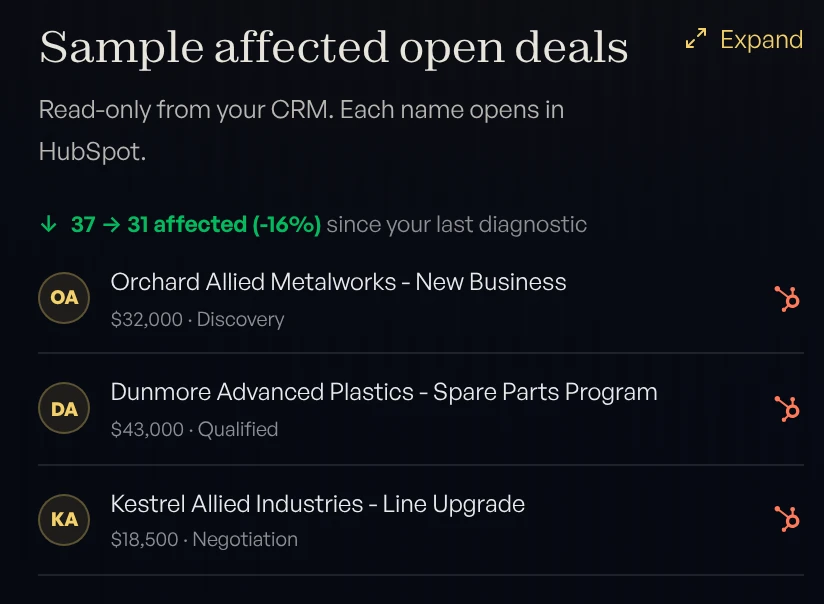
Sample affected open deals in a sample report: 37 down to 31 affected since the last diagnostic.

How does a HubSpot engagement run?

Four steps on dated milestones: a free diagnostic, the data, the systems built on it, then a documented handoff to your team. Co-founders Sam Feldotto and Chase Demelio do the work themselves. About the founders

  1. Weeks 1 to 2

    Diagnostic

    A free, read-only scan of your portal, scored within hours of connecting and walked through live.

  2. Weeks 2 to 8

    Foundation

    Your data, rebuilt record by record until your team trusts every number.

  3. Months 3 to 6

    Systems

    Pipeline, dashboards, comp and automation, built to fit how you sell.

  4. Then

    Handoff

    Documented in your own portal, with your team trained to run it.

  • Scoped firstEvery engagement is scoped before work begins. No open-ended hourly billing.
  • The founders do the workThe people on the first call are the people in your portal.
  • Yours to runDocumented in your own portal, with your team trained to run it.
  • No lock-inNo retainer. We work alongside your agency, finance team or RevOps hire.

HubSpot consulting questions.

How much does HubSpot consulting cost?
The first step is free: the CRM Diagnostic, its scored report and the live walkthrough cost nothing. Paid work is scoped before it begins, never billed as open-ended hours. Focused fixes for a smaller, contained data set typically start in the $10-20k range. Full foundation rebuilds for mature orgs or large, complex CRMs can run $100k+.
What HubSpot work do you take on?
Migrations into HubSpot, cleanup and data rebuilds, pipelines and forecasting, workflows and lead routing, reporting and dashboards, custom objects, Breeze and AI readiness, and custom development and integrations. We don’t run your ads or your outbound.
Do you build custom HubSpot apps and integrations?
Yes. We are HubSpot developers. Work we have shipped includes custom event apps for a marketing team, a Snowflake integration built on HubSpot’s Data Studio, and a full sales territories function built from workflows with custom code.
Do you migrate Salesforce or Pipedrive to HubSpot?
Yes. We run migrations into HubSpot, and the data is measured and cleaned before it moves. The HubSpot migration page covers what a migration involves and what drives its cost.
Can you get our HubSpot data ready for Breeze?
Yes. We get your records, definitions and permissions ready before Breeze agents and copilots start writing to your CRM, so they work from data your team already trusts.
Can you clean up a HubSpot portal that has years of buildup?
Yes. We map every property, workflow, list and report with what uses it, switch things off before deleting them so nothing breaks unnoticed, and rebuild a documented baseline your team can work in. It starts with the free CRM Diagnostic, so the cleanup is scoped from what is there.
Will you replace our agency or HubSpot admin?
No. We work alongside agencies, finance teams and RevOps hires rather than replacing them. Everything we build is documented in your own portal, with your team trained to run it. No retainer, no lock-in.

Find out what your CRM already knows.

Book a free, read-only diagnostic. We connect to your CRM, run 40+ checks across data quality, pipeline hygiene and ICP fit, and deliver a scored report within hours. Then we walk you through every finding live.

Book your free diagnostic
FreeRead-onlyReport within hoursNo pitch deck